Introduction
Princeton University, founded in 1746 as the College of New Jersey, is the fourth oldest institution of higher education in the United States and one of the nine colonial colleges established before the American Revolution. Located in Princeton, New Jersey, the university has produced 21 Nobel laureates, numerous heads of state, and leaders across virtually every field of human endeavor. Princeton is consistently ranked among the top universities in the world and is particularly renowned for its undergraduate education, which is uncommonly strong even among Ivy League institutions.
Princeton's commitment to undergraduate teaching is perhaps its most distinguishing characteristic. Unlike many research universities where graduate students and faculty research take priority, Princeton places exceptional emphasis on the undergraduate experience, with small class sizes, close faculty-student interaction, and a unique independent work requirement that challenges every student to produce original research.
Academics and Programs
Undergraduate Programs
Princeton offers undergraduate education through its Division of Humanities, Division of Social Sciences, Division of Natural Sciences, and School of Engineering and Applied Science. Students choose from over 37 concentrations (majors) and 55 interdisciplinary certificate programs.
Popular concentrations include Economics, Computer Science, Public and International Affairs, Molecular Biology, and Politics. Princeton's School of Engineering and Applied Science offers programs in chemical, civil, electrical, mechanical, and aerospace engineering, as well as computer science and operations research.
A distinctive feature of Princeton's undergraduate education is the independent work requirement. All students must complete:
- Junior Paper: A substantial research project completed during junior year under faculty supervision.
- Senior Thesis: An original research project completed during senior year, culminating in a public defense.
This requirement ensures that every Princeton graduate has experience conducting original research, regardless of their field of study.
Graduate Programs
Princeton's Graduate School offers doctoral and master's programs across the humanities, social sciences, natural sciences, and engineering. Notable graduate programs include:
- Princeton School of Public and International Affairs (SPIA): One of the top public policy schools in the world.
- Department of Physics: Historically one of the strongest physics departments in the United States.
- Department of Mathematics: Home to numerous Fields Medal winners.
- School of Engineering and Applied Science: Offers graduate programs across engineering disciplines.
Admissions
Admissions Statistics
Princeton's acceptance rate is approximately 4.5%. The university receives over 39,000 applications and admits roughly 1,700 students. The middle 50% SAT range is 1500-1580, and the ACT range is 34-35.
Application Requirements
- Application: Common Application or Coalition Application.
- Standardized Testing: Princeton requires SAT or ACT scores.
- Graded Writing Sample: Princeton uniquely requires a graded writing sample from a high school course.
- Recommendations: Two teacher recommendations and one counselor recommendation.
- Application Fee: $75, with fee waivers available.
Admissions Philosophy
Princeton practices need-blind admissions for all students, including international applicants. The university evaluates candidates based on academic achievement, intellectual curiosity, extracurricular involvement, and personal character. Princeton values students who demonstrate exceptional intellectual promise and a commitment to serving others.
Tuition and Financial Aid
Cost of Attendance
For 2024-2025, the estimated cost is approximately $86,700:
Financial Aid
Princeton is known for having one of the most generous financial aid programs in the country:
- Families earning less than $100,000 per year pay no tuition.
- Families earning less than $65,000 per year pay nothing (no tuition, no housing, no food).
- Princeton does not include loans in its financial aid packages. All aid is grant-based.
- International students receive the same financial aid as U.S. citizens.
Princeton's no-loan policy means students graduate without debt from their Princeton education. Over 60% of undergraduates receive financial aid.
Campus Life and Student Culture
Residential College System
Princeton's residential system consists of six residential colleges, each housing approximately 500 students. Freshmen and sophomores are required to live in residential colleges, while juniors and seniors have more housing options. Each college has its own dining hall, common rooms, and cultural identity.
Eating Clubs
One of Princeton's most distinctive traditions is the eating club system. Located along Prospect Avenue, the 11 eating clubs serve as social and dining centers for many juniors and seniors. Eating clubs are unique to Princeton and serve a function similar to fraternities and sororities at other universities, though they are co-ed and more integrated into campus life.
Extracurricular Activities
Princeton offers over 300 student organizations, including:
- The Princetonian: The student newspaper, founded in 1876.
- Princeton Debate Panel: One of the oldest debate organizations in the country.
- Princeton Triangle Club: A musical comedy troupe, one of the oldest in the United States.
- Numerous performing arts, cultural, and academic organizations.
Athletics
Princeton competes in NCAA Division I as part of the Ivy League. The university has won numerous Ivy League championships across sports and has one of the highest rates of varsity athlete participation among Ivy League schools.
Housing and Accommodation
Princeton guarantees housing for all four years. Freshmen and sophomores live in residential colleges, while juniors and seniors can choose from various options including residential colleges, upperclass dormitories, and eating club housing. Graduate student housing is available but limited.
International Students
International students make up approximately 12% of Princeton's undergraduate population. The Davis International Center provides support for international students, including immigration advising, cultural programs, and orientation. Princeton's need-blind policy for international students and generous financial aid make it an attractive option for international applicants.
Career Opportunities and Alumni Network
Career Services
Princeton's Office of Career Development provides career counseling, job and internship search assistance, and employer connections. Princeton's strong reputation across industries makes its graduates highly sought after.
Employment Outcomes
Princeton graduates pursue careers in finance, consulting, technology, public service, academia, and law. Major employers include Goldman Sachs, McKinsey, Google, and various government agencies. A significant number of graduates pursue graduate or professional school.
Alumni Network
Princeton's alumni include two U.S. presidents, numerous Supreme Court justices, and leaders in business, government, and academia. The alumni network is known for its loyalty and willingness to help fellow Princetonians.
Pros and Considerations
Advantages
- Exceptional undergraduate focus: Princeton places unusual emphasis on undergraduate education.
- No loans in financial aid: All aid is grant-based, meaning students graduate debt-free.
- Need-blind for all: Including international students.
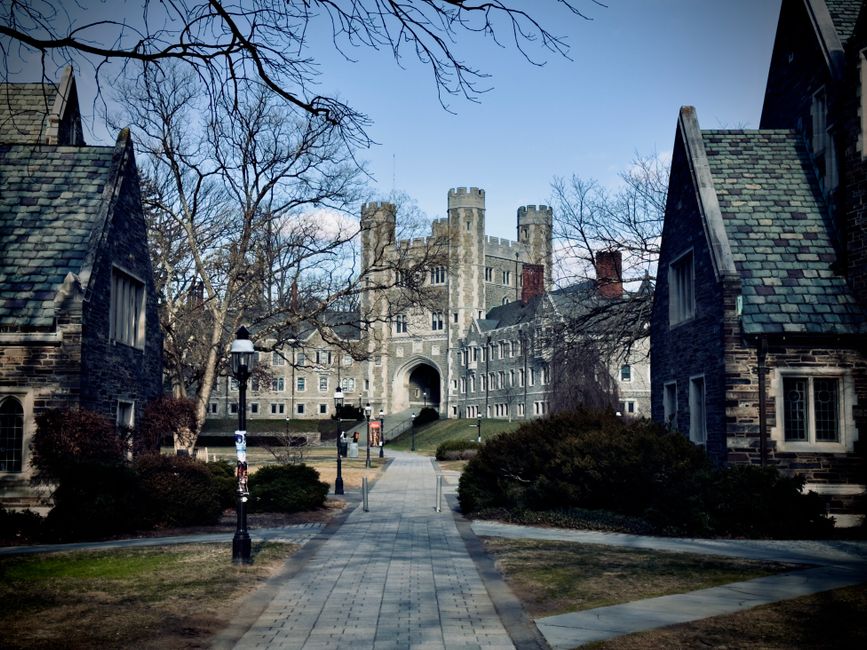
- Beautiful campus: Princeton's Gothic architecture is among the most iconic in American higher education.
- Independent work requirement: Ensures every student develops research skills.
Considerations
- Eating club culture: The eating club system may feel exclusionary to some students.
- Suburban location: Princeton is located in a small town, which may not appeal to students seeking urban environments.
- Academic pressure: The independent work requirement adds significant academic pressure.
- Limited graduate program size: Princeton's graduate programs are smaller than those at peer institutions.
Conclusion
Princeton University offers one of the finest undergraduate educational experiences in the world. Its commitment to teaching, generous no-loan financial aid, need-blind admissions for all students, and unique independent work requirement make it an exceptional choice for students who value intellectual depth and close faculty interaction. Prospective applicants should consider whether Princeton's suburban setting and eating club culture align with their preferences, but for students seeking a rigorous, research-oriented undergraduate education, Princeton is difficult to surpass.